Dems to Biden: You must out-populist Trump at the debate
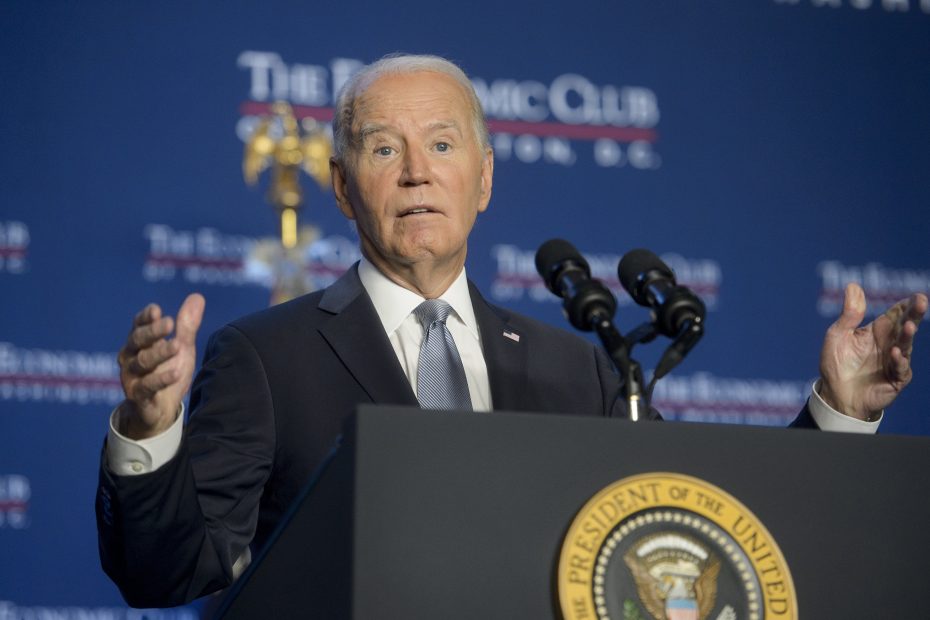
The president has a compelling antimonopoly record. But he doesn’t always lean into it. And voters don’t really know of it. The debate could change that.
Friday’s good jobs numbers may be a boost. But boosts haven’t yet materialized into political benefits.
We continue our July 5 special broadcast by revisiting our recent conversation with Christian Cooper, author of Better Living Through Birding: Notes from a Black Man in the Natural World and host of the Emmy Award-winning show Extraordinary Birder.
In a special broadcast, we feature part of our recent in-depth interview about The Night Won’t End, a new documentary from Al Jazeera English which takes an in-depth look at attacks on civilians by the Israeli military in Gaza and the United States’ role in the war.
In a special broadcast, we look at voices of a people’s history inspired by the late great historian Howard Zinn’s groundbreaking book, A People’s History of the United States, which helped reshape how history is taught in classrooms. Twenty years ago, Zinn and Anthony Arnove began organizing public readings of historical texts referenced in A People’s History of the United States.
We begin our July Fourth special broadcast with the words of Frederick Douglass. Born into slavery around 1818, Douglass became a key leader of the abolitionist movement. On July 5, 1852, in Rochester, New York, Douglass gave one of his most famous speeches, “What to the Slave Is the Fourth of July?” He was addressing the Rochester Ladies’ Anti-Slavery Society.
As Democrats discuss whether President Joe Biden should stand down as the 2024 Democratic presidential candidate following his disastrous debate performance, we speak with James Zogby, senior member of the Democratic National Committee, about his call for an open and transparent nomination process to select new candidates leading up to the Democratic National Convention next month, where the final nominee would be voted on.
Editor’s Note: Editor’s Note: Washington Week With The Atlantic is a partnership between NewsHour Productions, WETA, and The Atlantic airing every Friday on PBS stations nationwide. Check your local listings or watch full episodes here.
The Supreme Court made history this week by issuing a landmark ruling that dramatically expands the power of the presidency and helps protect Donald Trump from criminal prosecution.
This is an edition of The Wonder Reader, a newsletter in which our editors recommend a set of stories to spark your curiosity and fill you with delight. Sign up here to get it every Saturday morning.
Walking on the beach on the Fourth of July, I witnessed America the Sunburned. Reddened beachgoers strolled with ice cream or hot dogs; it would have been a lovely sight if not for the secondhand pain I was feeling.
This weekend, first lady Jill Biden has a momentous choice to make. Does she encourage her husband to overlook his personal well-being, recover from last week’s debate debacle, and keep up the campaign until November? Or does she persuade him to step aside, and yield the nomination to someone else?
Biden isn’t the only first lady to face a choice like this one.
Last week, former Israeli Minister and retired General Benny Gantz said that Israel could destroy Hezbollah’s military in a matter of days. But if such a thing could be done, Israel would have already done it. Prime Minister Benjamin Netanyahu similarly promised “total victory” against Hamas after October 7.
These declarations are dangerous bluster.
On Monday, Tucker Carlson wrapped up the seventh in a series of speeches to right-wing Australian audiences. To attend the event, I had to walk under a bright-pink sign acknowledging that the “traditional owners” of the Melbourne Convention and Exhibition Centre are an Aboriginal people, the Wurundjeri Wol Wurrung. Judging by the speech I heard, this sign was not put up at Carlson’s request.
The shakeup, which has not been previously reported, comes as anti-abortion groups petition Trump, his campaign advisers and members of the RNC not to make significant changes to the party’s platform on abortion.
The 21-year-old President’s Emergency Plan for AIDS Relief is credited with saving 25 million lives, but its budget is strained.
The cases moving through federal courts could further roll back abortion access, even if Biden wins in November.
The decision posted online shows that the justices voted to dismiss the dispute from their docket.
A federal plan to promote treatment and distribute overdose reversal drugs showed promise. Communities are trying to keep it going.
The president has a compelling antimonopoly record. But he doesn’t always lean into it. And voters don’t really know of it. The debate could change that.
Friday’s good jobs numbers may be a boost. But boosts haven’t yet materialized into political benefits.
In a special broadcast, we look at voices of a people’s history inspired by the late great historian Howard Zinn’s groundbreaking book, A People’s History of the United States, which helped reshape how history is taught in classrooms. Twenty years ago, Zinn and Anthony Arnove began organizing public readings of historical texts referenced in A People’s History of the United States.
We begin our July Fourth special broadcast with the words of Frederick Douglass. Born into slavery around 1818, Douglass became a key leader of the abolitionist movement. On July 5, 1852, in Rochester, New York, Douglass gave one of his most famous speeches, “What to the Slave Is the Fourth of July?” He was addressing the Rochester Ladies’ Anti-Slavery Society.
As Democrats discuss whether President Joe Biden should stand down as the 2024 Democratic presidential candidate following his disastrous debate performance, we speak with James Zogby, senior member of the Democratic National Committee, about his call for an open and transparent nomination process to select new candidates leading up to the Democratic National Convention next month, where the final nominee would be voted on.
At Joe Biden’s rally in Madison, Wisconsin, this afternoon, the men and women who had crammed into a middle-school basketball gym dutifully clapped, yelled words of support, and waved signs bearing the president’s name. But when it came time to chant “four more years,” they sounded as if they were merely going through the motions. Most of the rally-goers I spoke with said they were more committed to the Democratic Party than its 81-year-old leader.
No interview could reverse the damage that Joe Biden did to his campaign in the first presidential debate, but his conversation with George Stephanopoulos tonight showed that the president doesn’t even understand how profound the damage is.
The 20-minute interview, which aired this evening on ABC, featured a combative Biden, more like the president who gave a widely praised State of the Union address in March than the one who crumbled on a debate stage last week.
This is an edition of The Atlantic Daily, a newsletter that guides you through the biggest stories of the day, helps you discover new ideas, and recommends the best in culture. Sign up for it here.
Arthur C. Brooks, an expert on leadership and happiness, discusses the trap of staying on too long.
This is Atlantic Intelligence, a limited-run series in which our writers help you wrap your mind around artificial intelligence and a new machine age. Sign up here.
Generative AI could do many things to our world. But one thing it has certainly done already is facilitate endless (and endlessly strange) representations of Jesus Christ.
Following a landslide victory for the Labour Party, Britain has a new leader. The moment Keir Starmer is officially made prime minister of the United Kingdom, he will be given a flurry of briefings, piles of documents, and the urgent business to run the country. Lurking among those papers is a moral land mine.
Starmer will be given a pen and four pieces of paper. On each paper, he must handwrite identical top-secret orders that—hopefully—no other human being will ever see.
Though hiring remains strong, voters blame President Joe Biden for persistent high prices.
We continue our July 5 special broadcast by revisiting our recent conversation with Christian Cooper, author of Better Living Through Birding: Notes from a Black Man in the Natural World and host of the Emmy Award-winning show Extraordinary Birder.
In a special broadcast, we feature part of our recent in-depth interview about The Night Won’t End, a new documentary from Al Jazeera English which takes an in-depth look at attacks on civilians by the Israeli military in Gaza and the United States’ role in the war.