
Why the GOP Trap for Big-City Mayors Didn’t Work
This was supposed to be the college presidents hearing redux. It didn’t work out that way.
Amid ongoing chaos and outrage stemming from the Trump administration’s gutting of the U.S. Agency for International Development, we hear a critique of USAID and the “humanitarian-industrial complex” from South African anthropologist Kathryn Mathers. ”USAID is very much a part of a system and industry that not only depends on global inequality … but in many ways produces it,” she says.
“They cut everything at once.” ProPublica reporter Brett Murphy is tracking the aftermath of the “haphazard” and “draconian” dismantling of USAID, which experts warn will lead to a dangerous rise in disease epidemics around the world, including risking the resurgence of Ebola and tuberculosis. Despite the administration’s claims in court, says Murphy, “this is the opposite of a careful review,” and has left in its wake wasted resources, unpaid workers and an end to “literally lifesaving work.
The Supreme Court has rejected a request by the Trump administration to continue refusing to pay out nearly $2 billion for work completed by USAID, with Chief Justice John Roberts and Justice Amy Coney Barrett joining the court’s three liberal justices in the majority. However, the court’s decision did not specify when the money must be released, allowing Trump’s team to further dispute the issue in lower courts.
The health secretary’s muted response to the first major disease outbreak on his watch worries even some allies.
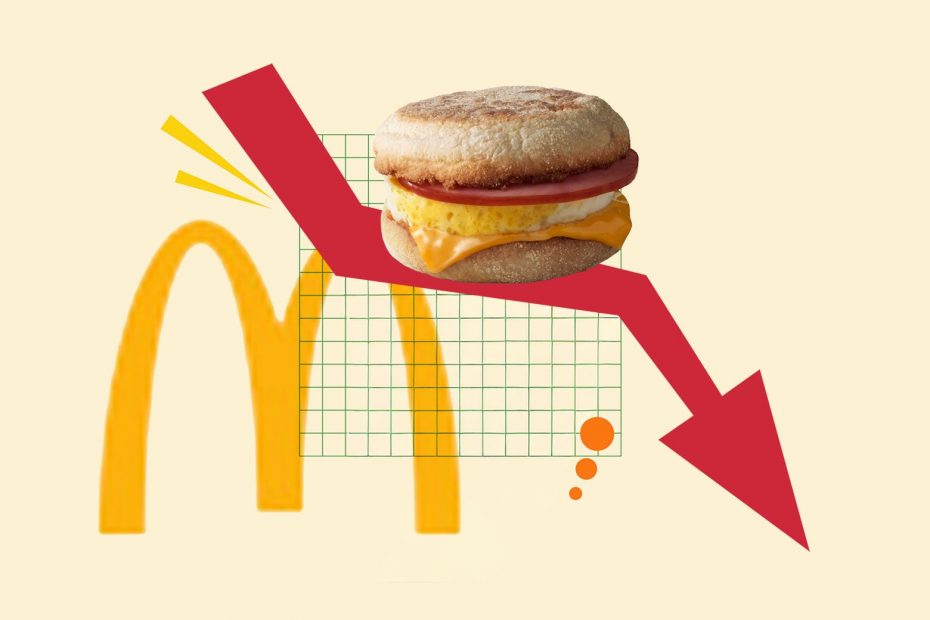
The only thing holding this country together is the promise of a little treat, and these tariffs may just take them away.
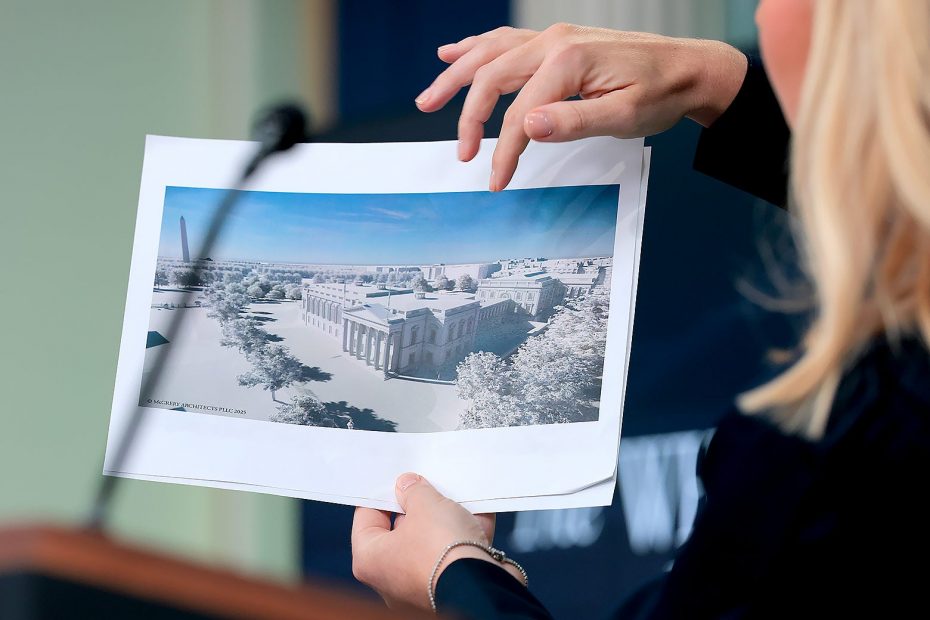
My quest to understand the 5,600-square-foot architectural curiosity that appeared next door.
Adam Chandler joins to discuss his book 99% Perspiration examining American ideals around work.
Luigi Mangione wasn’t the only one haunting the event.
You can’t blame Trump for the recent plane crashes. You can blame him for what’s about to happen.
Part of the unbridled joy of nabbing a great discount used to be the thrill of the chase.
An Idaho hospital is stepping in to argue that the state’s near-total abortion ban violates patients’ rights.
The outside group Indivisible said Democrats should hold their own town halls — and if Dems don’t, they’ll hold their own.
Trump’s FBI and DOJ dropped several ongoing investigations into threats against abortion clinics and issued a new memo signaling reduced enforcement going forward against such acts.
House Majority PAC will run TV and digital ads targeting vulnerable GOP congressional incumbents.
The Waves also discusses the Riverside Church controversy and the case of Sarah Milov.
What we say matters, especially depending on whom we say it to.
The Waves also discusses the case against Jeffrey Epstein and Taffy Brodesser-Akner’s Fleishman Is in Trouble.
Trump imposing new tariffs on top of broader policy uncertainty will mean a hit to growth. The question is how large of a hit it will ultimately be.
Lina Khan and her allies tried to remake antitrust law. Trump’s team is likely putting an end to that.
Look for a more emboldened president compared to the Trump of 2017.
Such challenges are the backdrop to the annual session of China’s parliament.
Right around the time that Donald Trump was arriving at the U.S. Capitol to address a joint session of Congress—the longest such speech, it would turn out, in the history of the presidency—Elissa Slotkin, the newly elected Michigan senator tasked with delivering the Democratic Party’s rebuttal, was telling me all the things she wouldn’t be talking about.
The key to understanding this morning’s Supreme Court ruling unfreezing American foreign aid is that two different rulings are at issue here, and teasing apart those technicalities reveals a loss that is perhaps more significant for the Trump administration than is first apparent.
The two orders both come from U.S. District Court Judge Amir Ali.
This is an edition of The Atlantic Daily, a newsletter that guides you through the biggest stories of the day, helps you discover new ideas, and recommends the best in culture. Sign up for it here.
For a few years, Democrats were so regimented that one could almost forget Will Rogers’s well-worn quip that he was not a member of any organized political party but rather a Democrat.
I sure hope J.D. Vance hasn’t seen what people are doing to him on the internet.
Generative-AI companies have been selling a narrative of unprecedented, endless progress. Just last week, OpenAI introduced GPT-4.5 as its “largest and best model for chat yet.” Earlier in February, Google called its latest version of Gemini “the world’s best AI model.” And in January, the Chinese company DeekSeek touted its R1 model as being just as powerful as OpenAI’s o1 model—which Sam Altman had called “the smartest model in the world” the previous month.
Last month, during Elon Musk’s appearance at the Conservative Political Action Conference, as he hoisted a chain saw in the air, stumbled over some of his words, and questioned whether there was really gold stored in Fort Knox, people on his social-media platform, X, started posting about ketamine.
Musk has said he uses ketamine regularly, so for the past couple of years, public speculation has persisted about how much he takes, whether he’s currently high, or how it might affect his behavior.